Display panel manufacturing — LCD, OLED, and MicroLED — demands some of the strictest cleanroom environments in any industry. A single micron-sized particle can create visible pixel defects, making contamination control directly tied to production yield. This article examines the cleanroom standards required for different display technologies, the role of FFUs in maintaining ISO Class 3–5 environments, filtration strategies using H14 HEPA and U15+ ULPA filters, chemical filtration for AMC control, and energy optimization through EC motor technology. It also covers how FFU configurations vary across array, cell, and module processes. Wujiang Deshengxin Purification Equipment Co., Ltd. (DSX) manufactures FFU, EFU, HEPA filters, ULPA filters, chemical filters, and other clean air solutions with in-house production of fans, motors, control systems, and filter media — enabling integrated solutions for display manufacturing cleanrooms.
Energy consumption is the largest operating cost in cleanroom facilities, with fans accounting for 60–80% of total energy costs. This article explores the key technologies driving energy-efficient FFU design — EC motors that achieve up to 50% energy savings compared to AC alternatives, variable speed controls for demand-based airflow adjustment, and smart monitoring systems for real-time optimization. It also examines ISO 14644-16, the energy efficiency standard for cleanrooms, and real-world results such as TSMC's 60% fan efficiency gain saving 156万 kWh per fab annually. Wujiang Deshengxin Purification Equipment Co., Ltd. (DSX) manufactures FFU, EFU, HEPA filters, ULPA filters, chemical filters, and other clean air solutions with in-house production of fans, motors, control systems, and filter media — enabling integrated energy-optimized designs.
ISO 14644 vs GMP Cleanroom Standards: Key Differences ExplainedCleanrooms are classified to ensure the air quality meets the requirements of the processes conducted within them. Two major classification systems dominate the industry: ISO 14644-1:2015 — the international standard for cleanrooms and a
Uneven airflow is one of the most common yet overlooked problems in cleanroom ceiling FFU systems — and it can compromise product quality, regulatory compliance, and operational efficiency. This article examines the root causes of airflow non-uniformity: poor FFU layout, inconsistent fan performance, ceiling grid and installation issues, external airflow disturbances, and lack of system-level balancing. It explains how to diagnose airflow problems through velocity measurements, smoke visualization, particle counting, and pressure mapping — and provides practical solutions for achieving consistent, uniform airflow. The article also discusses why vertically integrated manufacturing matters for airflow uniformity and how DSX's in-house production of fans, motors, control systems, and filters enables faster customization, consistent quality, and single-point accountability.
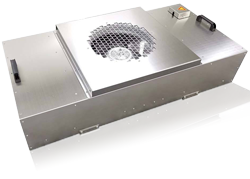
This comprehensive guide explores everything you need to know about Deshengxin Fan Filter Units (FFUs). Starting with the basic definition and working principle, it details the 8 key advantages of Deshengxin FFU systems—including exceptional filtration efficiency (up to 99.9995%), 30-50% energy savings with EC motor technology, low noise operation below 58 dB, and anti-static capabilities. The guide provides a full breakdown of FFU classifications by size, material, motor type, control method, static pressure, and filter class. It also covers 7 major application areas (semiconductor, pharmaceutical, healthcare, aerospace, food, clean booths, and data centres), offers an 8-step selection framework, and includes installation best practices and maintenance guidelines. This is the definitive resource for engineers, facility managers, and procurement professionals seeking reliable, cost-effective FFU solutions for critical cleanroom environments.
Third-generation semiconductor cleaning equipment (SiC, GaN) faces severe space constraints. Standard FFUs at 250–350mm simply cannot fit into the limited vertical clearance of these advanced tools. This article introduces DSX's 70mm Ultra-Thin EFU—engineered specifically for space-constrained equipment integration. With a total operational thickness of ~100mm, ULPA filtration efficiency up to 99.9995% (@0.12μm), and full-supply-chain manufacturing, this solution enables cleaning equipment manufacturers to maximize internal space without compromising cleanroom performance.
In pharmaceutical manufacturing, achieving cGMP (Current Good Manufacturing Practice) compliance is non-negotiable. For aseptic processing and cleanrooms, the Fan Filter Unit (FFU) is the frontline defense against microbial contamination. In this FAQ, DSX Purification explains how our medical-grade FFUs specifically support cGMP standards. We detail the importance of unidirectional airflow (Grade A zones), the necessity of built-in PAO integrity testing ports (RSR design), and how our smart EC motor control systems provide the continuous data logging required for strict FDA and EMA regulatory audits.
In the food and beverage industry, standard cleanroom equipment can become a deadly source of contamination. A Fan Filter Unit (FFU) with exposed screws, sharp corners, and poorly sealed joints provides the perfect breeding ground for mold and bacteria (like Listeria or Salmonella). In this FAQ, DSX Purification defines the strict engineering criteria of a "Hygienic Design" or "Food-Grade" FFU. Discover how our fully-welded SS304/SS316L housings, crevice-free designs, and wash-down-ready motors ensure absolute compliance with HACCP and Food GMP standards.